
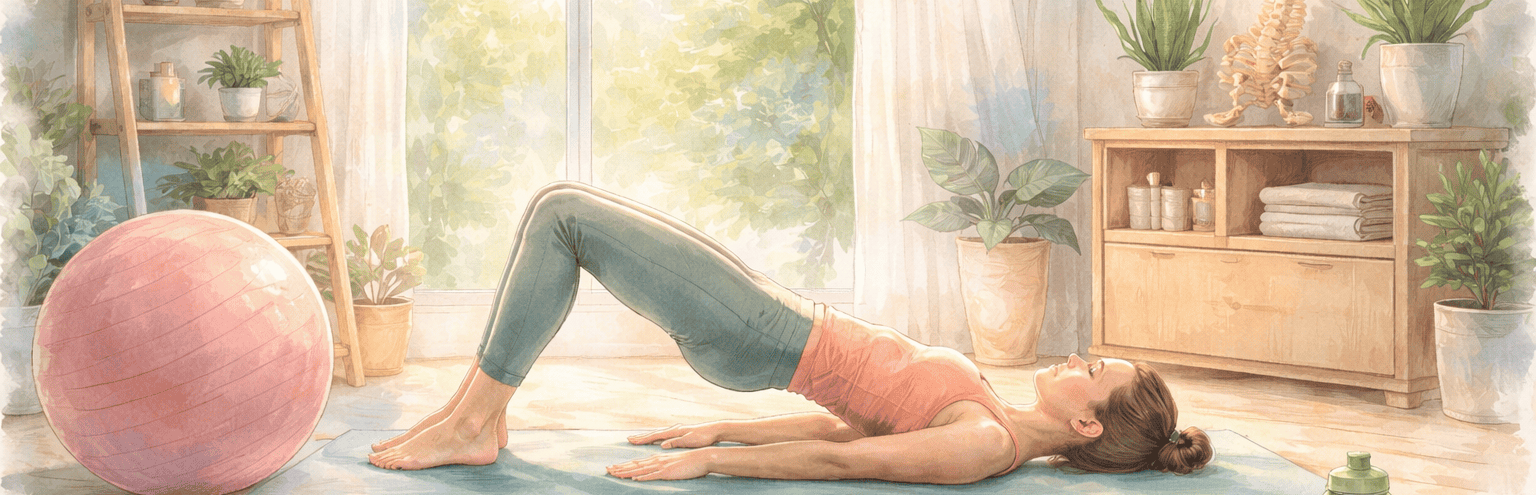
Quick Answer: Pilates for back pain is one of the most well-supported low-impact approaches for reducing discomfort and building the spinal strength needed to prevent future flare-ups. It works by targeting the deep core muscles — including the abdominals, glutes, and pelvic floor — that support and protect the spine. Research shows Pilates can decrease low back pain compared to no exercise and non-specific exercise, making it a practical, accessible choice for most adults. [2]
Key Takeaways
- Pilates targets the root cause of many back problems: weak deep core muscles and poor spinal alignment.
- Research confirms Pilates can reduce low back pain more effectively than no exercise or general movement. [2]
- The NHS recognises Pilates-inspired exercise as a helpful tool for managing chronic back pain. [4]
- Five evidence-based exercises — pelvic tilts, bird dog, glute bridge, modified side plank, and spine stretch forward — form the foundation of a back-care Pilates practice. [2]
- Pilates is gentle yet effective, making it suitable for beginners, those returning after injury, and older adults.
- Consistency matters more than intensity: short, regular sessions build lasting strength and resilience.
- Pilates can be combined with other treatments such as physiotherapy and resistance training for a well-rounded approach. [3]
- Both mat-based classes and online sessions are effective — the best option is the one you'll actually do regularly.
- Always consult a GP or physiotherapist before starting if your back pain is severe, acute, or follows an injury.
Why Does Back Pain Respond So Well to Pilates?
Back pain often stems from muscular imbalances, poor posture, and weak stabilising muscles around the spine. Pilates addresses all three directly.
The method strengthens the deep abdominals, glutes, and pelvic floor — the muscles that form a natural corset around the lumbar spine. When these muscles work well together, they reduce the load placed on spinal discs and joints, which is where a great deal of back pain originates. [2]
Pilates also trains movement awareness. Rather than simply building bulk, it teaches the body to move with control, to find neutral spine alignment, and to breathe in a way that supports the core throughout every exercise. Over time, this mindful movement translates into better posture during everyday activities — sitting, standing, lifting — which reduces the cumulative strain that leads to pain.
The Mayo Clinic confirms that Pilates exercises can both prevent and treat back pain when performed correctly. [3] The NHS goes further, offering a dedicated Pilates-inspired video programme for people living with chronic back pain. [4]
"Research has shown that Pilates can decrease low back pain compared to no exercise and non-specific exercise." — Dr. Courtney L. Gilbert, PT, DPT, Physical Medicine and Rehabilitation [2]
Who Is Pilates for Back Pain Suitable For?
Pilates for back pain is appropriate for most adults, but it works best when matched to the right situation.
Good candidates include:
- People with chronic, non-specific low back pain (the most common type)
- Those recovering from a disc injury, once cleared by a healthcare professional
- Adults with poor posture from desk-based work or sedentary lifestyles
- Older adults looking for a low-impact way to stay strong and mobile
- Beginners who have never exercised regularly before
- Athletes wanting to improve core stability and reduce injury risk
Proceed with caution or seek medical advice first if you have:
- Acute back pain following a recent injury
- A diagnosed spinal condition such as severe scoliosis, spinal stenosis, or osteoporosis
- Nerve pain (sciatica) that is currently flaring
- Any pain that worsens with movement
The good news is that a skilled Pilates instructor can adapt exercises to suit individual needs. At Pilates Moves You, instructor Donna Finnie draws on personal experience of recovering from a serious back injury. She understands — both professionally and personally — how to work with the body rather than against it.
The 5 Best Pilates Exercises for Back Pain
These five exercises are evidence-based and recommended specifically for people managing low back pain. [2] They build strength from the centre, improve spinal mobility, and can be done on a mat at home with no equipment.
1. Pelvic Tilt
The foundation of any back-care Pilates practice. Lie on your back with knees bent and feet flat on the floor. Gently flatten your lower back into the mat by engaging your abdominals, hold briefly, then release.
- Repetitions: 8–12 controlled reps [2]
- Why it helps: Teaches neutral spine awareness and gently mobilises the lumbar vertebrae
- Common mistake: Gripping the glutes hard — keep the movement subtle and controlled
2. Bird Dog
Start on all fours with a neutral spine. Extend one arm forward and the opposite leg back simultaneously, keeping the hips level. Return and repeat on the other side.
- Repetitions: 6–8 per side
- Why it helps: Strengthens the deep spinal stabilisers and improves balance without loading the spine
- Common mistake: Letting the lower back arch — keep the core gently engaged throughout
3. Glute Bridge
Lie on your back, knees bent, feet hip-width apart. Press through your feet to lift the hips, creating a straight line from shoulders to knees. Lower slowly.
- Repetitions: 10–12
- Why it helps: Activates the glutes, which are often underused in people with back pain, reducing strain on the lumbar spine
- Common mistake: Pushing too high and overextending the lower back
4. Modified Side Plank
Lie on your side, propped on one forearm with knees bent. Lift the hips to create a straight line from head to knees.
- Hold: 10–20 seconds with steady breathing [2]
- Why it helps: Strengthens the lateral stabilisers of the spine and pelvis
- Common mistake: Letting the hips drop — focus on connecting breath and movement to maintain form
5. Spine Stretch Forward
Sit tall with legs extended in front, feet flexed. Reach forward with both arms as you exhale, rounding gently through the spine. Inhale to return upright.
- Repetitions: 5–8 [2]
- Why it helps: Improves flexibility in the back body and reinforces core control within a pain-free range
- Common mistake: Collapsing through the chest — lead with the crown of the head and move with intention
How Often Should You Do Pilates for Back Pain?
Consistency matters far more than duration. Short, regular sessions produce better results than occasional long ones.
| Frequency | Expected Benefit |
|---|---|
| 1 x per week | Gentle maintenance; some improvement in awareness |
| 2–3 x per week | Noticeable improvement in strength and pain reduction over 4–8 weeks |
| Daily (20–30 mins) | Fastest progress; ideal during a rehabilitation phase |
Most people begin to feel a meaningful difference within four to six weeks of regular practice. The key is to move with control rather than push through pain. Progress over perfection is the approach that gets results.
If you're just starting out, the free Pilates videos available through Pilates Moves You are an excellent, no-cost way to build a consistent home practice at your own pace.
Mat Pilates vs. Private Sessions: Which Is Better for Back Pain?
Both are effective. The right choice depends on your situation.
Choose group mat classes if:
- Your back pain is mild to moderate and non-acute
- You enjoy the energy and community of group exercise
- You want an affordable, consistent weekly session
- You're comfortable following verbal cues and adapting independently
Choose private 1-to-1 sessions if:
- You have a specific injury or diagnosis requiring tailored exercise
- You're returning to movement after a period of rest or medical treatment
- You want detailed feedback on your alignment and technique
- You prefer a personalised programme built around your goals
At Pilates Moves You, individual private sessions are available at Studio 17 in Heaton Moor, South Manchester. Donna tailors every session to the individual — as client John noted: "Having one-to-one sessions means they are tailored for you. Donna has an overall, long-term goal to achieve your objectives... Her feedback keeps you doing everything correctly."
For those who can't get to a studio, live online Pilates classes offer a flexible, accessible alternative from home.
Common Mistakes to Avoid When Using Pilates for Back Pain
Even well-intentioned movement can cause problems if approached incorrectly. Here are the most frequent errors:
- Pushing through pain. Discomfort from muscle fatigue is normal. Sharp, shooting, or worsening pain is not — stop and rest.
- Skipping the breath. In Pilates, breath is not optional. It activates the deep core muscles and keeps the nervous system calm. Connect breath and movement from the very first rep.
- Rushing repetitions. Speed removes control. Slow, deliberate movement is what builds the neuromuscular connection that reduces back pain long-term.
- Doing too much too soon. Starting with five exercises three times a week is more sustainable than a daily hour-long session that leads to burnout or soreness.
- Ignoring posture between sessions. Pilates teaches better posture; the goal is to carry those habits into daily life. Sitting and standing with awareness between classes accelerates progress.
Can Pilates Replace Other Back Pain Treatments?
Pilates works best as part of a broader approach, not as a standalone cure. Clinical Pilates is increasingly used alongside physiotherapy and chiropractic care because it restores balance through improved alignment, supportive strength building, and refined movement patterns. [1]
It can be effectively combined with:
- Physiotherapy and manual therapy
- Resistance training for overall strength
- Swimming or walking for cardiovascular health
- Mindfulness and stress management (chronic pain has a significant psychological component)
Pilates is not a replacement for medical care. If back pain is severe, persistent, or accompanied by symptoms such as numbness, tingling, or bladder changes, see a GP first.
Getting Started with Pilates for Back Pain in 2026
Starting is simpler than most people expect. Here's a practical first week:
- Day 1: Try a beginner-friendly free video to assess how your body responds. The free Pilates videos at Pilates Moves You are a great starting point.
- Day 3: Repeat the same session, focusing on breath and control rather than range of motion.
- Day 5: Add one new exercise (try the bird dog or glute bridge) and notice how your back feels the following morning.
- End of week 1: Reflect on any changes in stiffness, posture, or energy. Most people notice something positive within the first two sessions.
If you're in South Manchester, the Beginners and Beyond class at Studio 17 in Heaton Moor is specifically designed for new starters and those returning after injury. Small class sizes mean individual attention is built in from day one.
For those curious about working with Donna directly, beginning your Pilates journey is a helpful resource to understand what to expect.
Frequently Asked Questions
How quickly does Pilates help back pain? Most people notice some improvement in stiffness and comfort within two to four weeks of regular practice. Meaningful, lasting reduction in pain typically develops over six to twelve weeks of consistent sessions two to three times per week.
Is Pilates safe if I have a herniated disc? Often yes, but only once cleared by a GP or physiotherapist. A qualified instructor can modify exercises to avoid spinal flexion or loading that might aggravate a disc injury. Private sessions are the safest starting point in this case.
What type of Pilates is best for back pain — mat or reformer? Mat Pilates is the most accessible and is well-supported by evidence for back pain management. Reformer Pilates can also be beneficial but requires specialist equipment and instruction. Mat work is an excellent starting point for most people.
Can Pilates make back pain worse? Done correctly, no. Done incorrectly — with poor form, too much intensity, or through acute pain — it can. This is why working with a qualified instructor, especially at the start, makes a significant difference.
Do I need to be flexible to start Pilates for back pain? Not at all. Pilates builds flexibility gradually. Many people with back pain have tight hamstrings and hip flexors — Pilates addresses these directly, and exercises are always adaptable to your current range of motion.
How is Pilates different from yoga for back pain? Both can help, but Pilates places a stronger emphasis on core strength, spinal alignment, and controlled, precise movement. Yoga tends to focus more on flexibility and mindfulness. For back pain specifically, Pilates' focus on building strength from the centre is particularly well-suited.
Can I do Pilates at home for back pain? Yes. Mat Pilates requires no equipment and can be done in a small space. Free and low-cost online classes make home practice very accessible. The key is following qualified instruction rather than improvising, especially when managing pain.
Is Pilates suitable for older adults with back pain? Absolutely. Pilates is one of the most age-friendly forms of exercise available. Exercises can be performed lying down, seated, or standing, and are always adaptable. Many of Donna's clients at Pilates Moves You are older adults who have found it transformative for both back pain and overall wellbeing.
Conclusion
Back pain is one of the most common reasons people seek out Pilates — and for good reason. The evidence is clear, the method is gentle yet effective, and the results are real when approached with consistency and care. [2][4]
The approach is straightforward: build strength from the centre, move with control, connect breath and movement, and trust the process. Progress over perfection is what gets people feeling stronger every day.
Your next steps:
- 🟢 Try it today: Start with the free Pilates videos at Pilates Moves You — no equipment needed.
- 🟢 Join a class: If you're in South Manchester, explore the group classes in Heaton Moor — beginners are always welcome.
- 🟢 Go one-to-one: For a personalised back-care programme, book a private session with Donna at Studio 17.
- 🟢 Practice online: Join the live online Pilates membership for just £8.99 per month and build your practice from home.
The back pain that feels like a barrier today can become the very reason Pilates changes your life. Many of Donna's clients started exactly where you are now — and they haven't looked back.
References
[1] New Year Stronger You Clinical Pilates For A Healthier 2026 - https://www.foxsportandspine.ca/new-year-stronger-you-clinical-pilates-for-a-healthier-2026
[2] Pilates For Chronic Back Pain - https://www.healthline.com/health/back-pain/pilates-for-chronic-back-pain
[3] Pilates For Back Pain - https://betterme.world/articles/pilates-for-back-pain/
[4] Chronic Back Pain Pilates Exercise Video - https://www.nhs.uk/live-well/exercise/pilates-and-yoga/chronic-back-pain-pilates-exercise-video/